

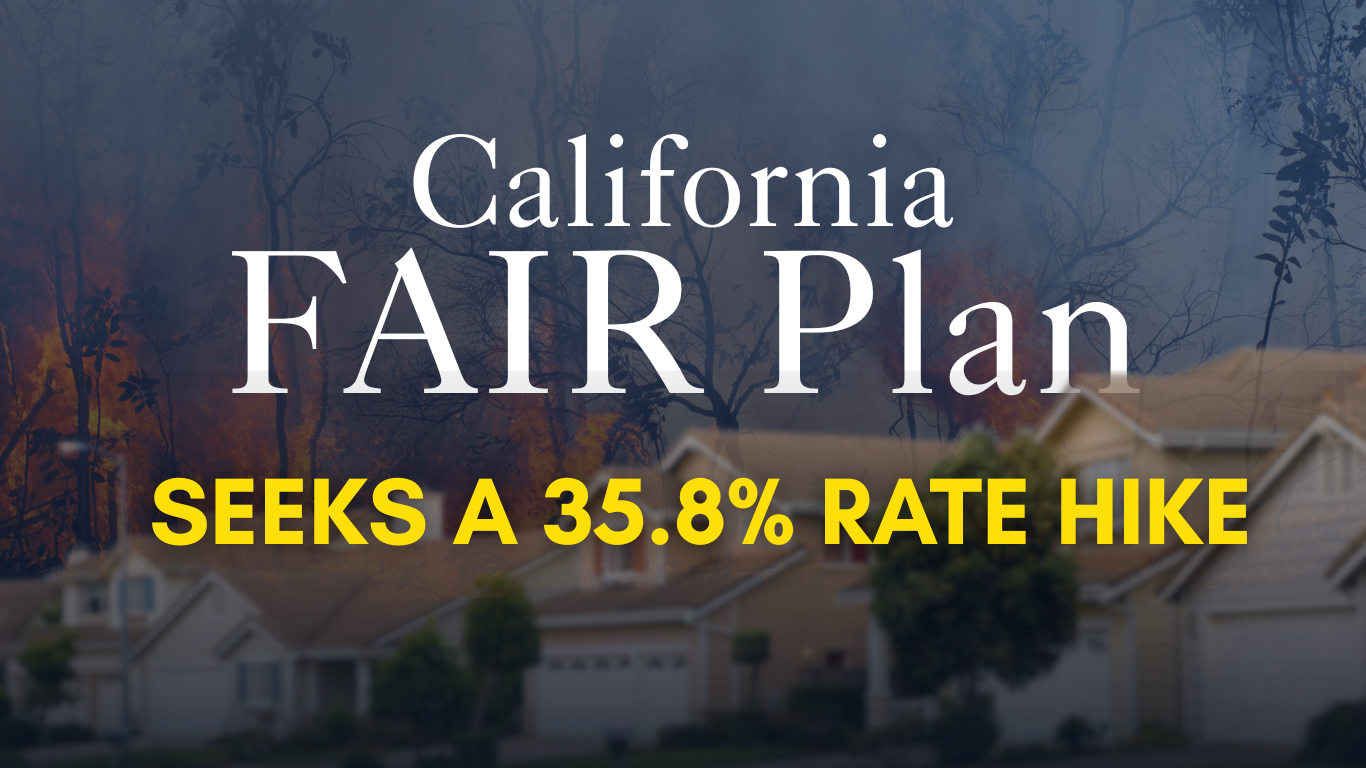
Is Your Home Insurance at Risk? California FAIR Plan Proposes a 35.8% Rate Hike

Homeowners’ insurance is supposed to be boring. You pay your premium each year and you rarely think about it until you have a claim. But for tens of thousands of Californians, insurance has become a source of anxiety rather than security. Insurers have dropped customers in wildfire‑prone areas, forcing many to buy coverage from the California Fair Access to Insurance Requirements (FAIR) Plan – a state‑mandated pool designed as a last resort. This fall, the plan filed its largest rate request in years, and it could reshape what people pay for coverage.
What is the California FAIR Plan?
The FAIR Plan was created in the 1960s to provide fire insurance to property owners who can’t find coverage in the private market. It is not funded by taxpayers; it’s a pool of licensed insurers that are required to share the risk.
Key points homeowners should understand
| Key facts about the FAIR Plan | Evidence |
|---|---|
| Last resort coverage | The plan is meant for owners who can’t get insurance elsewhere. It is a state‑run program, but it’s funded by participating insurers, not taxpayers. |
| Higher cost | A FAIR Plan policy covers damage caused by fire but not theft, water damage, liability or other perils. United Policyholders notes that homeowners who end up on the FAIR Plan must buy a separate “wrap‑around” policy to cover other risks woodsidefire.org |
| Fire‑only policy | Because it insures high‑risk properties and provides only basic coverage, FAIR Plan premiums are generally higher than standard home‑insurance policies. The Woodside Fire Protection District warns that Fair Plan policies “provide only basic fire protection (no liability or theft) and cost more than a traditional policy”woodsidefire.org. United Policyholders reports that many people forced into the plan after being dropped by their carrier now pay two or three times what they used to pay uphelp.org. |
| Need for additional coverage | Homeowners must purchase a second, non‑FAIR Plan policy (often called a Difference‑in‑Conditions or “wrap‑around” policy) to protect against non‑fire perils. |
| Eligibility | The plan is available only after an applicant has been declined by standard insurers. Applications may be subject to inspections and defensible‑space requirements. |
Because the FAIR Plan does not include liability coverage or protection against theft, water damage or other common perils, homeowners typically hold two policies: the FAIR Plan policy (for fire) and a supplemental policy for everything else. Not only does this doubling‑up increase complexity, it raises the overall cost of coverage uphelp.org.
Why is the FAIR Plan seeking a 35.8 % rate hike?
Distribution of rate changes
The average increase masks wide variation among properties. According to data compiled by the San Francisco Chronicle (reproduced by Yahoo News), about half of all FAIR Plan customers would see premiums rise 40 – 55 %, while rates in low‑risk areas could decrease as much as 78 % yahoo.com. A handful of properties with extreme risk could see increases of more than 300 %yahoo.com. If the proposal is approved, new rates would apply at renewal dates beginning April 1 2026 yahoo.com.
Previous rate history
FAIR Plan rate filings are not unprecedented. Rates increased by about 20 % in 2019 and 16 % in 2021, though the plan originally asked for a much larger hike in 2023 and the commissioner cut it to 15.7 % mymotherlode.com. The current proposal would be the largest increase since the plan’s creation.

Wildfire losses and growth in policyholders
California’s wildfire seasons have become longer and more destructive. The January 2025 Palisades and Eaton fires destroyed homes across Los Angeles County, forcing the FAIR Plan to bill member insurers $1 billion to pay claims yahoo.com. The number of FAIR Plan policies has ballooned from about 140,000 in 2018 to more than 590,000 by mid‑2025, roughly a 300 % increase yahoo.com. This growth strains the plan’s finances, because each new policy adds exposure but premiums must be sufficient to pay claims.
New rate‑setting rules
Until recently, California insurers had to set rates using only past loss experience; they couldn’t factor in the cost of reinsurance or sophisticated wildfire catastrophe models. Under reforms adopted by Insurance Commissioner Ricardo Lara in late 2024 (the Sustainable Insurance Strategy), insurers can now model future wildfire risk and include reinsurance costs. The FAIR Plan’s filing is the first to fully use these new tools. A spokesperson said that under the old rules, they would have sought an 80 % average increase. Using catastrophe models and reinsurance costs reduced the requested hike to 35.8 %yahoo.com.
What does this mean for homeowners?
Higher insurance bills for many
For homeowners forced into the FAIR Plan, premiums are already high because they must carry two policies. United Policyholders reports that customers who paid around $1,400 a year with a traditional insurer now pay more than $3,100 when forced into the FAIR Plan and a wrap‑around policyuphelp.org. A 35.8 % average increase on the FAIR Plan portion means those bills could climb even higher. In high‑risk zones (such as parts of Sonoma County, the Sierra Nevada foothills or the Santa Monica Mountains), increases could exceed 50 %yahoo.com, translating to thousands of dollars per year.
Homeowners in low‑risk areas could see their FAIR Plan premiums fall. The Chronicle’s analysis suggests some ZIP codes in the Central Valley and urban cores might experience rate decreases up to 78 %yahoo.com. However, the overall impact is clearly upward, especially given the required wrap‑around policy.
Incentives for mitigation
The FAIR Plan and the Insurance Department have introduced discounts for wildfire‑mitigation measures. Homeowners can potentially reduce premiums by up to 15 % if they harden their homes – for example by replacing vents, roofs and siding with fire‑resistant materials and clearing vegetationhousingwire.com. Participating in nationally recognized Firewise USA programs can also qualify homeowners for discountswoodsidefire.org. These programs are worth pursuing; they improve safety and may blunt some of the impending rate hike.
Budgeting and shopping around
Here are some steps homeowners should consider:
-
Check your renewal date. Rate changes won’t take effect until policy renewal after April 1 2026yahoo.com. Knowing your renewal date helps you plan for a possible increase.
-
Ask about mitigation credits. Document any hardening measures (defensible space, ember‑resistant vents, Class A roofs) and provide proof to your agent to seek discountshousingwire.com.woodsidefire.org
-
Compare non‑admitted options. The FAIR Plan is a last resort, not a requirement. Some surplus‑line carriers or mutual insurers may write policies in high‑risk areas at competitive rates. Shop at least every six months; new insurers sometimes enter the marketwoodsidefire.org.
-
Prepare for higher overall costs. Even if your FAIR Plan premium decreases, you still need a separate wrap‑around policy. Factor both premiums into your budget. Many homeowners pay two or three times what they paid before being droppeduphelp.org.
-
Stay informed on legislation. Lawmakers have introduced bills to add oversight and financing options for the FAIR Plan. For example, Assembly Bill 234 would add two legislative representatives to the plan’s governing committee, and AB 226 would allow bond financing to ensure claims can be paidcalmatters.org. Changes to the plan’s governance or funding could affect future rates.
- Document your property. Keep detailed records of improvements and mitigation efforts. If you are forced onto the FAIR Plan, strong documentation may help you shop for coverage later.
Controversy: Smoke‑damage claims
The rate‑increase request arrives while the FAIR Plan faces legal challenges over its handling of smoke‑damage claims. Following the 2025 Los Angeles County fires, homeowners sued the plan, alleging that it denied claims unless there was “permanent physical change” to the propertymerlinlawgroup.com. The California Department of Insurance issued Bulletin 2025‑7 reminding insurers that smoke damage is a covered peril and that permanent physical change is not required. The FAIR Plan, however, continued using the disputed policy language, prompting the department to file legal action accusing the plan of denying more than 200 smoke‑damage claims and violating consumer‑protection lawscalmatters.org. Governor Gavin Newsom and consumer advocates have urged the plan to process smoke‑damage claims quickly and fairlycalmatters.org.
The investigation could influence the rate filing. Consumer groups argue that the commissioner should ensure FAIR Plan customers are treated fairly before approving any rate increase. Homeowners affected by smoke damage should document contamination, seek professional testing, and consider hiring a public adjuster or attorney to challenge denials.
If you’re unsure how the FAIR Plan rate increase could impact your coverage or premiums, let’s talk. I can help you review your current policy, explore mitigation options, and find ways to stay protected without overpaying.
If you’re unsure how the FAIR Plan rate increase could impact your coverage or premiums, let’s talk. I can help you review your current policy, explore mitigation options, and find ways to stay protected without overpaying.
Call me at (760) 300-9166 or email steven@sdsoldbysteve.com to schedule a quick consultation.
Stay informed, stay protected — and make sure your home insurance works for you, not against you.

Bottom line for homeowners
If you live in a fire‑prone area and have struggled to keep your insurance, the FAIR Plan’s 35.8 % average rate request is both alarming and unsurprising. It reflects the rising cost of risk and the limitations of a system built for a different climate. While some homeowners in low‑risk areas may see premiums fall, most can expect their insurance costs to climb. Now is the time to:
-
Harden your property and claim available mitigation credits.
-
Review your policy and budget for higher premiums.
-
Document everything, from home improvements to conversations with agents, to support claims and future shopping.
-
Follow legislative and regulatory developments that might affect the FAIR Plan’s rates and accountability.
The FAIR Plan is a safety net, but it’s an expensive and imperfect one. Homeowners should treat insurance as part of broader resilience planning: invest in mitigation, maintain savings for higher premiums, and stay engaged with policy debates that will shape the future of insuring homes in California.
Leave a Reply